

Note : This article is the 3rd article in a series exploring how technology, global mobility, and new power dynamics are set to disrupt nation-states, redefine the global economy, and reinvent governance in the 21st century. Here are the first articles in the series:
The Ability of States to Borrow Will Shrink
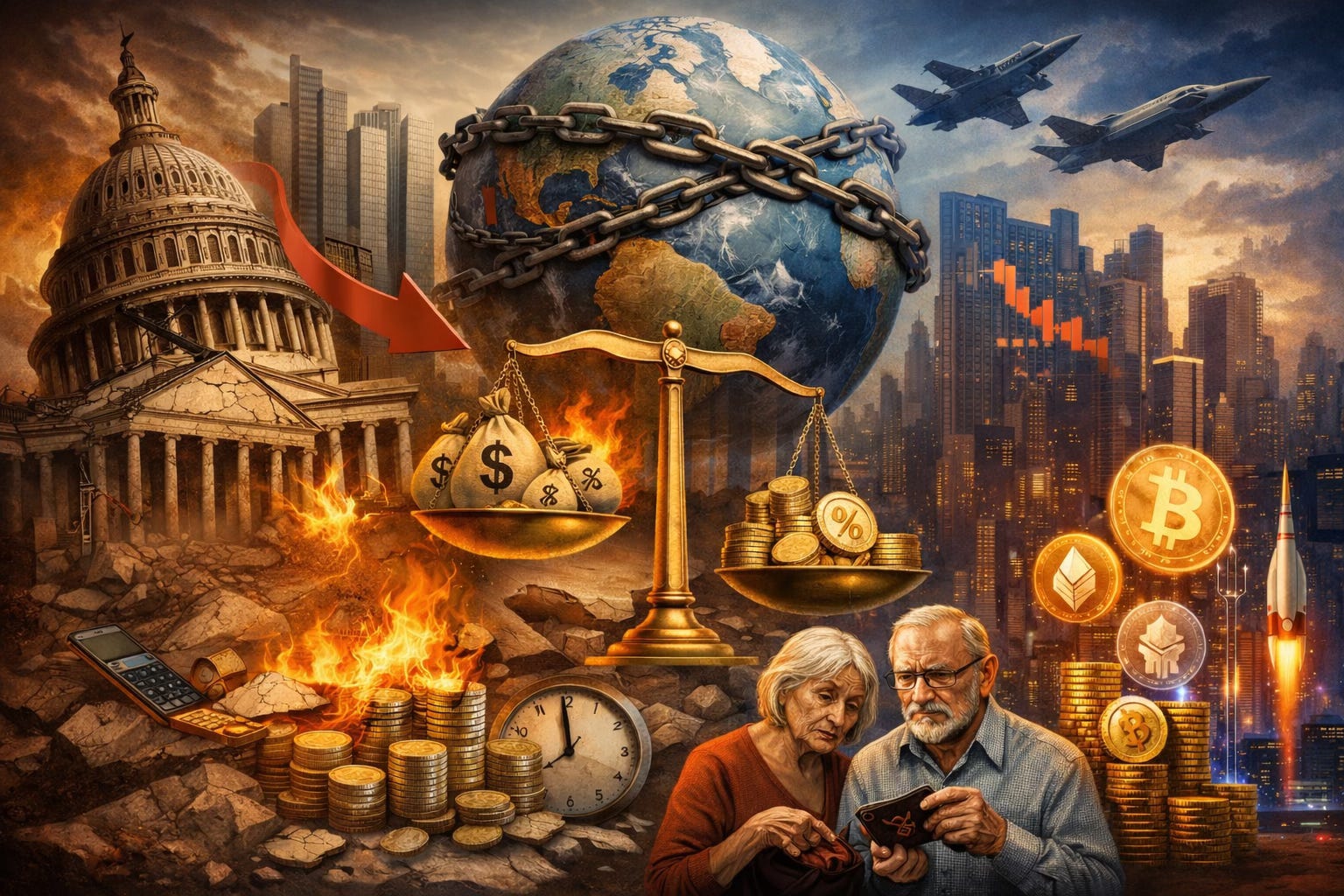
The more indebted states become, the harder it will be for them to convince people, companies, and financial institutions to lend them money. The more indebted a country is, the less certain it is that it will be able to repay its debts without resorting to money printing, which increases inflation and reduces the real value the lender receives in repayment.
That means states will have to raise interest rates to compensate, in order to increase lenders’ returns, which increases the cost of debt servicing. This can quickly spiral into a vicious circle.
In time, it is possible that U.S. government bonds, long considered the safest in the world, will lose that reputation. That confidence deficit could then spread to the sovereign bonds of all highly indebted states.
The money that would normally have been invested in those bonds will then look for other vehicles. It is highly likely that part of that money will go into some cryptos instead.
The Size of the Welfare State and Its New Nature
The data in this article clearly shows that most nation-states no longer have the means today to sustain the size they adopted in the 20th century.
What characterizes the size of the state in the 20th century compared with the 19th? Essentially the birth of the welfare state.
So it is above all the welfare state that will have to be reduced, and the state will mainly have to return to its sovereign functions: police, army, justice.
The problem, of course, is that rolling back social gains is very hard for the population to accept, and often amounts to political suicide, whether in democracies or in more authoritarian regimes.
The welfare state will therefore simply be pared back, gradually eroded by reforms that increase its cost and reduce its benefits.
States that want to keep the tax base needed to maintain a welfare state of the same size as in the 1970s will have to turn themselves into fiscal and digital dictatorships to keep all would-be leavers in their nets, which will discourage many digital nomads from settling there. They will also have to massively encourage immigration or higher birth rates, unless they count on artificial intelligence and robotics to compensate (we will discuss this below).
About Inequality
The question of inequality in a world where jurisdictions compete to attract customers naturally arises.

Inequality vs. Poverty
First of all, it is important to remember that inequality is not a major issue in itself. What is serious is poverty.
Would you rather live in a country where all citizens are equal and the median salary is $600 per month? Or in a country with millionaires and billionaires, but where the median salary is $2,500 per month?
Obviously, the second situation is preferable. So the most important thing is to eliminate poverty and make sure everyone has a reasonable chance to succeed in life and fulfill themselves, whatever their starting conditions, rather than seeking equality at all costs - something that does not exist in nature (everyone having different abilities).
As for inequality, my prediction is that it will worsen within countries, but improve between countries: poor countries will become less poor and rich countries less rich.
That is the logical conclusion of a world in which the states that have the least to lose and the most to gain by attracting the most mobile population - that is, often the poorest states - will be the ones offering the best packages and rolling out the red carpet.
The Size of the Pie
In the end, if the market does its work and forces governments to provide better services at lower cost, and if experiments in new forms of governance take place, massive value creation will occur, enriching the world just as capitalist democracies enriched it relative to the monarchies of the past.
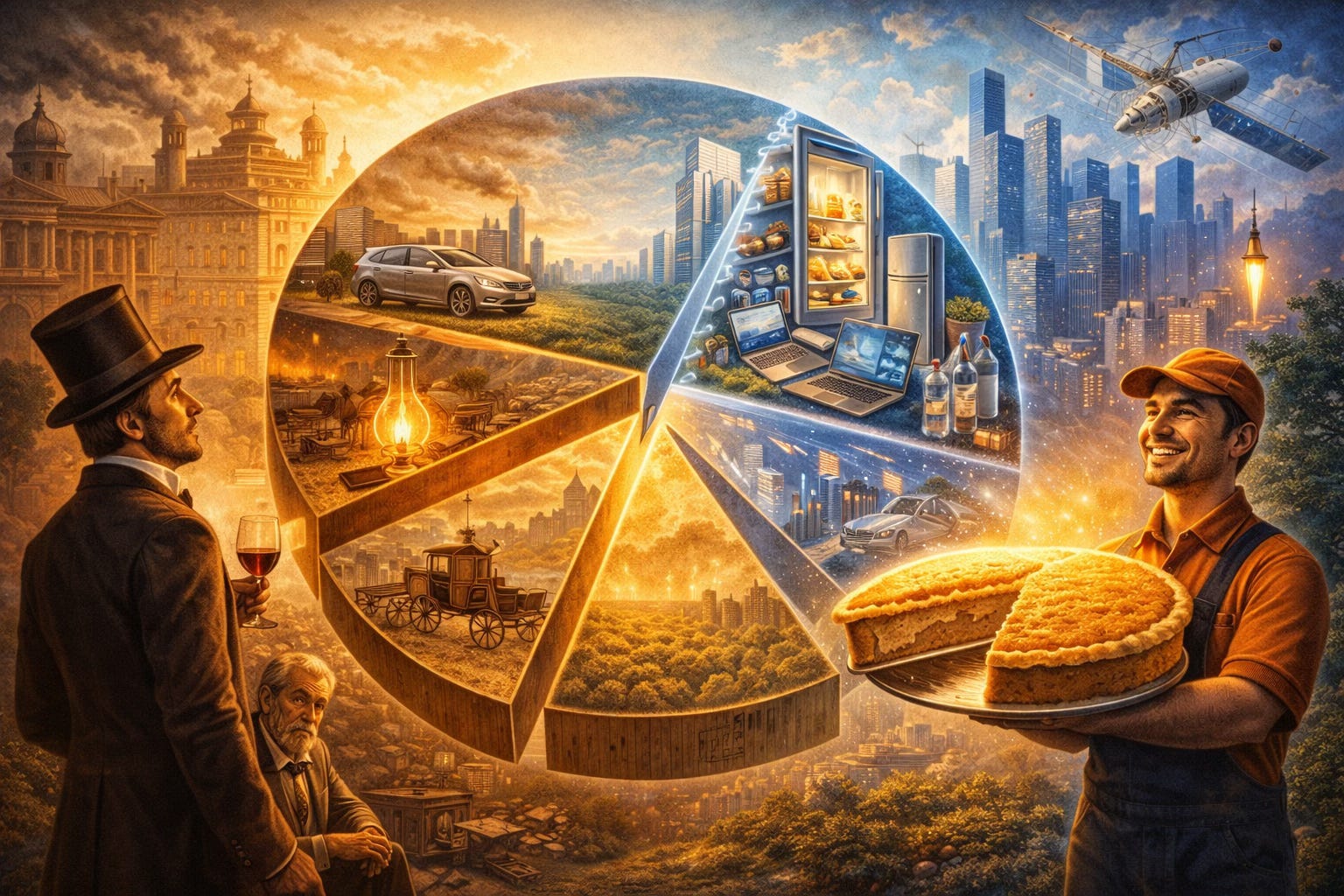
As a result, the pie will grow for everyone, which will reduce the impact of inequality.
A minimum-wage worker today is, in many respects, far richer than a wealthy person in 1800: he has a car, a refrigerator, electricity, hot water, a computer, the Internet, effective vaccines, access to modern medicine at a reasonable cost, and a myriad of other things our multimillionaire from the early 19th century could only dream of.
Likewise, in a few decades a low-income person will have access to many technologies that improve life and that even today’s multibillionaires cannot buy - all the more so because governments will have been made more efficient and effective by all the trends we have seen in the previous articles.
The future of the EU
Unless there is a major turnaround, the future of the EU looks bleak:
More and more regulations and taxes.
Which increasingly suffocate the economy and innovation.
Which deepen the lag of European countries relative to the United States, China, and other emerging countries.
Which will push European politicians toward their favorite solution: more regulation.
And then the cycle starts again.
In time, the EU could become an open-air museum: a very nice place to visit, but one offering few economic opportunities.
Countries that are too indebted will have to resign themselves to printing money to repay a significant share of their debt, to avoid a default that would be even more catastrophic, or to avoid devoting too large a share of their budget to paying debt interest.
However, eurozone countries are not allowed to print money as they wish, so they will bear the full brunt of their massive indebtedness.
In time, that could make the eurozone implode or at least create a multi-speed eurozone.
Coming soon
In the next article, we explore how nation-states may respond to this pressure: from mass surveillance and social scoring to the rise of ultra-fast transportation and cryptocurrencies reshaping the very foundations of money.
Stay tuned! In the meantime, feel free to follow Disruptive Horizons on X/Twitter, and join the tribe of Intelligent Rebels by subscribing to the newsletter:

