

Note : This article is the 6th in a series on how the internet and globalization are disrupting nation-states—and what new governance models may emerge. Here are the first articles in the series:
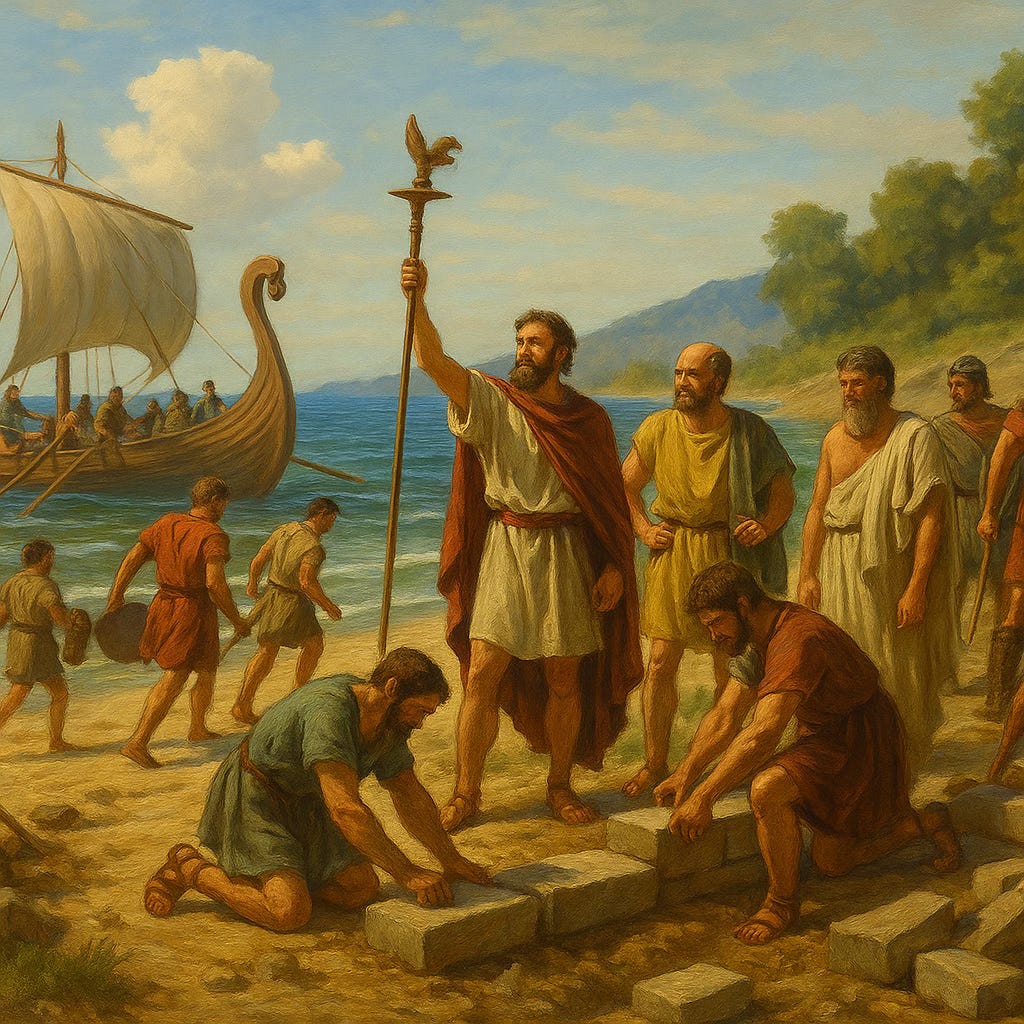
In ancient times, the Greeks often solved their governance problems by founding new colonies. Around 800 to 600 BC, at the height of this Greek expansion, the world population was less than 200 million1, less than the population of Brazil today, but spread across the globe, offering many unspoiled spaces.
If the political regime in one place was unsuitable, it was possible to finance a maritime expedition, gather volunteers, and set off to found a new city elsewhere.
The initiative could come from entrepreneurs among the population, or from the city government, which offered to co-finance expeditions for dissatisfied citizens.
This is how many cities, such as Marseille and Syracuse, came into being around the Mediterranean and Black Sea: it is estimated that the Greeks founded around five hundred of them2 .
Today, the situation is very different. The world’s population has exceeded 8 billion, and there is no uninhabited land left for new settlements.
Current governments control almost all land territories, making it impossible to establish new communities without negotiating with the authorities in place.
We have explored how negotiations like these could be conducted with free cities and network states, and we will address the issue of online unions in the next articles.
But what if we could also find completely untouched areas where we would be free to build new communities?
So where can we still find places available to experiment with new forms of governance?
At sea, or in space.
Space cannot be colonized yet with our current technologies, so let’s talk about the sea.
After all, calling our planet “Earth” is a misnomer: with 71% of its surface submerged, we should probably call it ‘Water’ instead. And most of that surface is in international waters, which are not claimed by any country.
The concept of seasteading, popularized by Patri Friedman and Joe Quirk in their book of the same name3 , proposes a bold solution for taking advantage of all this space: creating floating cities on the high seas, using boats, platforms, and other floating structures.
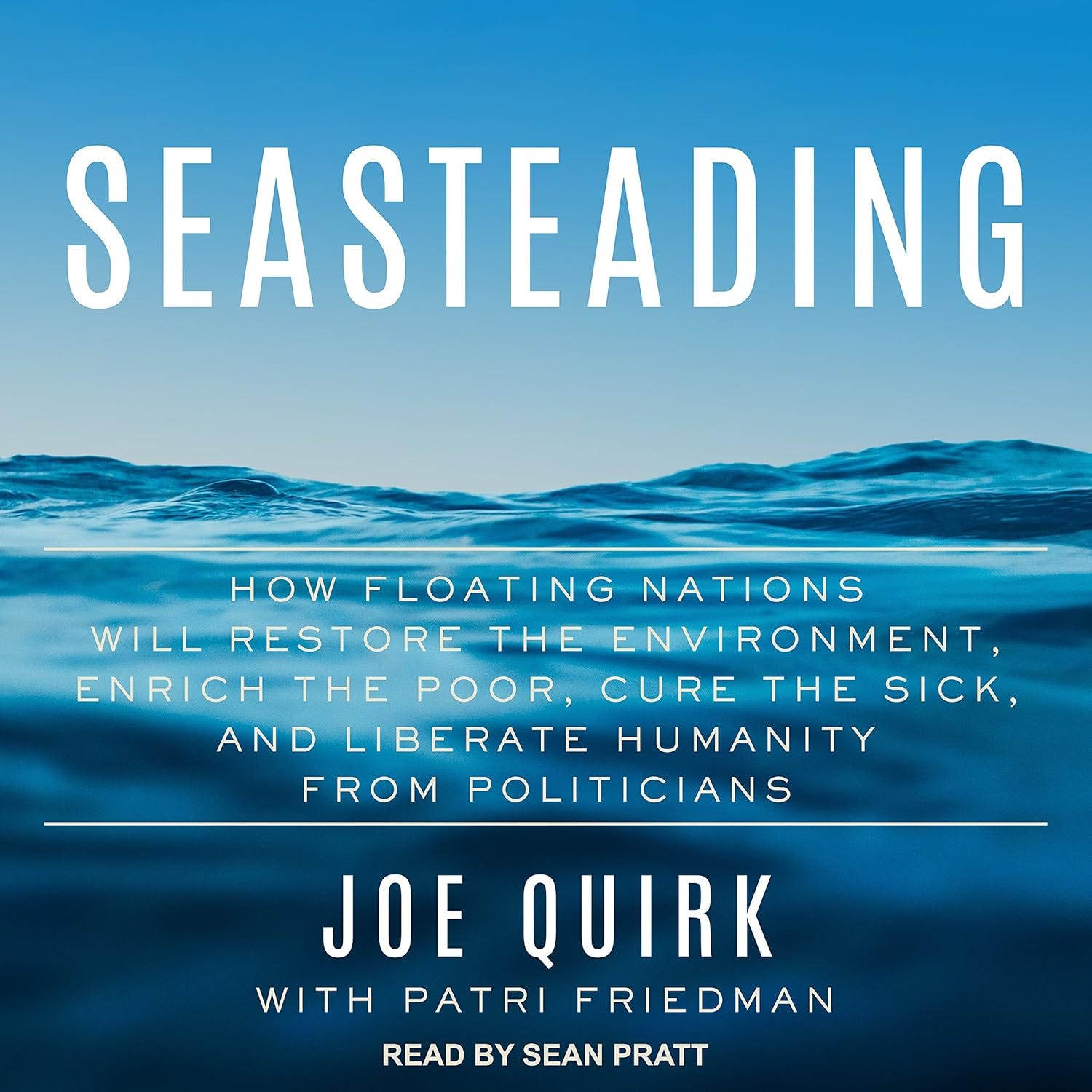
These floating platforms can be designed to adapt to marine conditions while providing a safe and livable environment for residents, and could house residences, businesses, research centers, and much more.
The autonomous communities that would live there would have the freedom to experiment with various systems of governance and economics, far from the constraints of land-based regulations.
And the main advantage of seasteading is mobility.
We have talked extensively in this book about the importance of voting with your feet, and how it is a more powerful form of voting than casting a ballot.
Now, what if you could vote with your home?
This would be possible with boats or floating platforms that are part of a seasteading community.
Imagine the concept of free cities, but without the constraint of having to negotiate with a government: you could create a free floating city almost anywhere in international waters, for example in an area spared from cyclones, near the coast of a friendly country, etc.
Eventually, there could be dozens or hundreds of floating cities, each offering a unique system of governance based solely on the principle of voluntarism.
If a community encounters problems or if residents are dissatisfied with the rules in force, it is possible to move the platform to another location, join another existing floating city, or create a new one.
This flexibility encourages increased competition between different communities, creating a peaceful form of Darwinian competition that promotes innovation and continuous improvement of governance systems.
Seasteads could also play a role in preserving the marine environment. By incorporating sustainable technologies and adhering to eco-friendly practices, these floating cities could contribute to the protection of the oceans while providing economic opportunities for local populations.
Seasteading therefore offers an exciting vision of a future where land borders are no longer a barrier to social and political innovation. By harnessing the vastness of the oceans, humanity can explore new ways to live in harmony with nature and maintain peaceful and prosperous relationships among its members.
At the time of writing, no concrete applications have yet emerged. But the technology exists and there is no shortage of projects: I believe it is only a matter of time before the first program emerges.
Stay tuned! In the meantime, feel free to follow Disruptive Horizons on X/Twitter, and join the tribe of Intelligent Rebels by subscribing to the newsletter:
Coming soon
The next article will explore the rise of prediction markets and how they could revolutionize everything from forecasting to governance, all the way to futarchy.
And here are the first articles of this series :



“Long-term dynamic modeling of global population and built-up area in a spatially explicit way: HYDE 3.1,” Kees Klein Goldewijk, Arthur Beusen, and Peter Janssen, The Holocene, 2010.
“Greek Colonization,” Mark Cartwright, World History Encyclopedia, 2018.
Seasteading: How Floating Nations Will Restore the Environment, Enrich the Poor, Cure the Sick, and Liberate Humanity from Politicians, 2017.
You may want to look up the story of the Republic of Rose Island (repubblica dell’Isola delle Rose) from the late sixties: governments don’t tend to go along passively with loss of sovereignty and tax revenue. And they can change the rules..