

Note : This article is the 7th in a series on how the internet and globalization are disrupting nation-states—and what new governance models may emerge. Here are the first articles in the series:
The examples of new forms of governance that we have seen throughout this series may seem difficult to implement.
But what if I told you that there have been examples of similar structures throughout history?
In the Middle Ages, as we saw in previous articles, technologies favored the decentralization of power, and we saw the emergence of forms of governance that were quite original compared to what we know today.
Here are some interesting historical examples that show what is possible when technology promotes decentralization:
The Hanseatic League
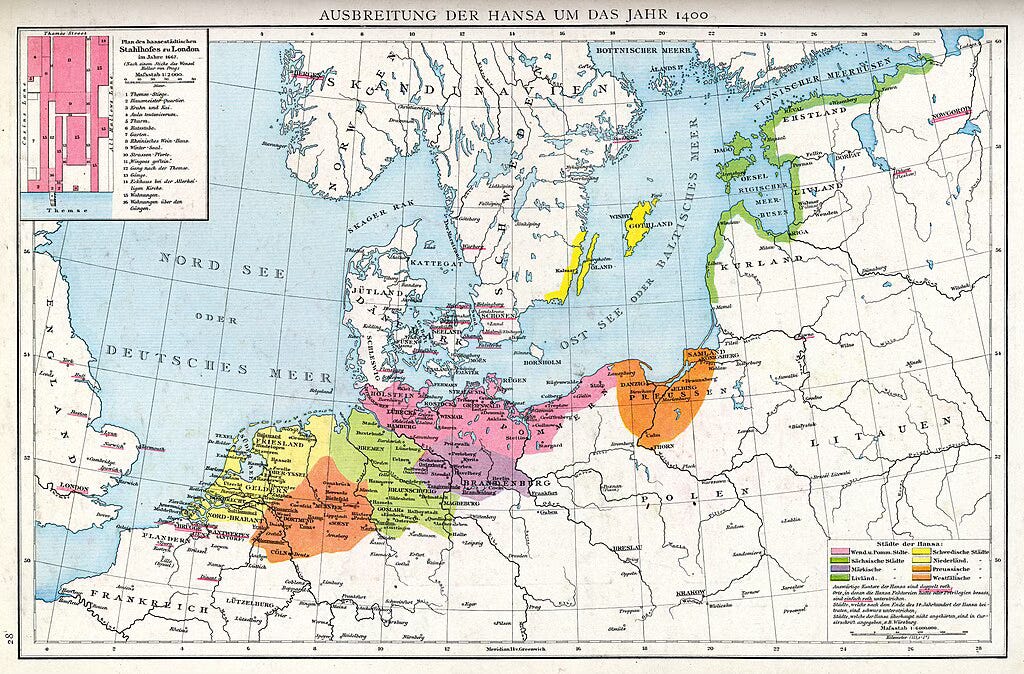
The Hanseatic League was a commercial and defensive alliance of merchant cities in Northern Europe, founded in the 12th century and reaching its peak between the 13th and 15th centuries. Composed mainly of German cities, the league also included cities on the Baltic and North Seas, such as Bruges and Novgorod.
The Hanseatic League functioned as a supranational entity with its own laws, courts, and armies to protect its commercial interests. Each member city retained its autonomy but cooperated with others to negotiate treaties, settle disputes, and defend trade routes. This flexible, decentralized alliance enabled remarkable economic prosperity and considerable political influence, free from the centralization typical of modern nation-states.
The Knights Templar and the Knights Hospitaller
The Knights Templar and the Knights Hospitaller were religious military orders that emerged during the Crusades in the 12th century. Although they are primarily known for their military and religious roles, they also developed unique and influential systems of governance.
The Knights Templar, for example, owned land throughout Europe and the Middle East, and their commanderies operated autonomously while following the strict rules of the order. They also established a sophisticated banking network, offering financial services on an international scale.
The Knights Hospitaller, or Order of St. John of Jerusalem, also ruled over significant territories, including the island of Rhodes and later Malta. Their governance structure included an elected Grand Master and a governing council, combining elements of elective monarchy and aristocratic republic.
Napoleon conquered Malta on his way to Egypt, expelling the knights, who then lost their last territory.
Yet, surprisingly, this order still exists1 and is even considered a sovereign entity under international law! It has its own passport, diplomatic relations with 113 states2 , which may include embassies3 , is a permanent observer member of the United Nations4 , and even has two buildings in Rome, which are legally located outside Italy and have their own sovereignty5 , like the Vatican.

Apart from that, the order no longer possesses any territory today. Can you see how it can be considered a network state ahead of its time?
The Holy Roman Empire
The Holy Roman Empire, founded in 962 and dissolved in 1806, was a unique political complex. Unlike the centralized monarchies of the time, the Empire was a confederation of hundreds of political entities, including kingdoms, duchies, principalities, counties, and free cities.
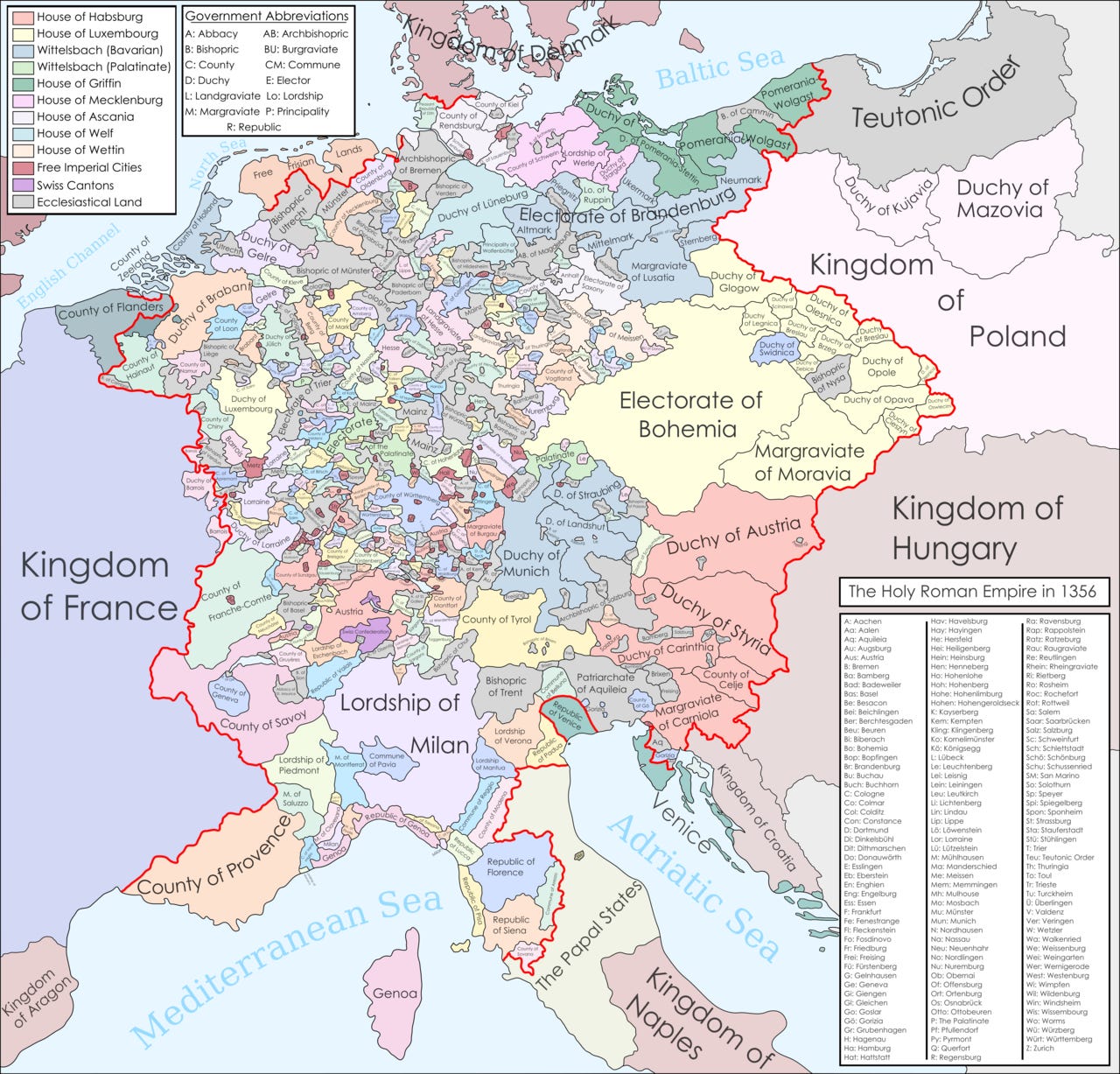
The emperor was elected by the prince-electors, introducing an element of elective governance at a very high level. Each member of the Empire retained a large degree of autonomy, but they were all united under imperial authority and common institutions such as the Imperial Diet. This decentralized structure allowed for great cultural and political diversity, although sometimes at the expense of efficiency and political cohesion.
What we can learn from these DAOs of the Middle Ages
What must be understood above all is that nation-states are a very recent institution in history, as we have seen, and that they have by no means proven their ability to endure over time.
However, I do not believe that they are destined to disappear. Simply put, their power, legitimacy, and influence will gradually decline—much like the trajectory of the Catholic Church : a slow and inexorable decline, caused by all the disruptions we have studied.
This decline, which has been predicted and has already begun, is creating a vacuum that new forms of governance are already rushing to fill.
The new models of society presented in this series are the most popular at the time of writing, but that does not mean that others cannot emerge in the future.
These new forms, which are inherently based on these disruptions, building on these disruptions rather than being undermined by them, have the potential to bring enormous value to humanity and to be more suited to the future than the model that dominated the 19th and 20th centuries.
This is particularly true if we can voluntarily implement a wide range of governance experiments through free cities, network states, seasteading, and other platforms.
The more we can peacefully experiment with new forms of governance, the more likely we are to find systems that work better than today’s and that can bring immense prosperity to humanity.
I believe that if we play our cards right, we can play the same role as the founding fathers of the United States: helping to establish a system of governance that could become a model for the rest of the world.
So, will you be among the pioneers who will try this experiment?
Stay tuned ! In the meantime, feel free to follow Disruptive Horizons on X/Twitter and join the tribe of Intelligent Rebels by subscribing to the newsletter :
And here are the first articles of this series :




Under the name “Sovereign Military Hospitaller Order of Saint John of Jerusalem, Rhodes and Malta,” no less!
“Bilateral Relations” website of the Order of Malta, 2024.
I myself stumbled upon some of these embassies during my travels, notably in Prague and Cotonou.
“The government seat of the Sovereign Order of Malta” Order of Malta website, 2024.
The Nizaris are also cool: https://www.adssx.com/p/a-brief-history-of-cloud-countries